

Is a direct - connect sliding actuator suitable for low - load applications?
In the realm of industrial automation and mechanical engineering, the selection of the right actuator is crucial for the success of any project. As a supplier of Direct - connect Sliding Actuators, I've had numerous discussions with clients regarding the suitability of these actuators for different applications, especially low - load scenarios. In this blog, I'll delve into the features of direct - connect sliding actuators and evaluate their appropriateness for low - load applications.
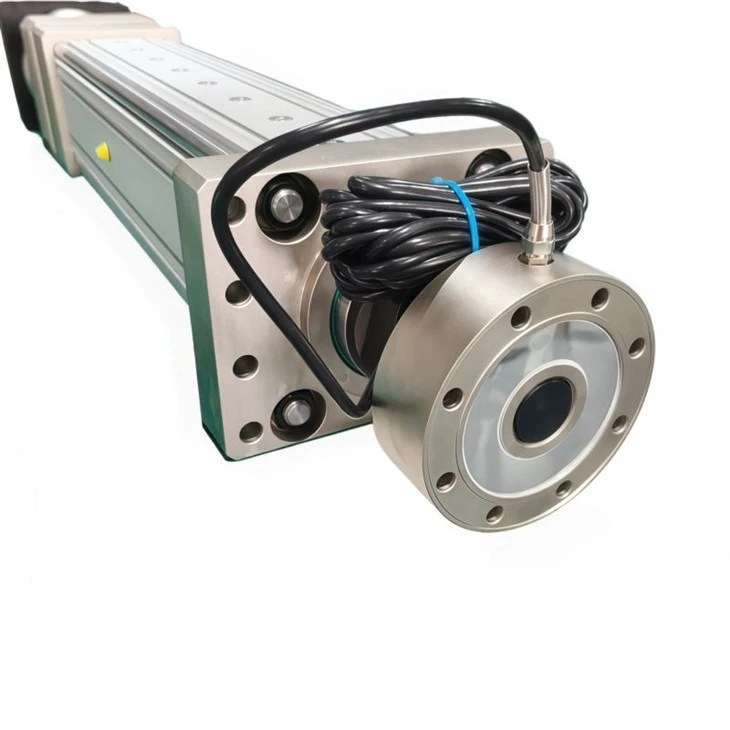

Understanding Direct - connect Sliding Actuators
Direct - connect sliding actuators are a type of linear actuator that provides linear motion. They are designed with a direct - connection mechanism, which means that the driving force is directly transferred to the moving part without the need for complex transmission components. This design offers several advantages, such as high efficiency, compact size, and relatively simple installation.
The basic structure of a direct - connect sliding actuator typically consists of a motor, a screw or belt drive system, and a sliding platform. The motor provides the power, and the drive system converts the rotational motion of the motor into linear motion. The sliding platform then moves along a guide rail, carrying the load.
Characteristics of Low - load Applications
Low - load applications are those where the actuator is required to move relatively light objects. These applications often demand high precision, smooth motion, and sometimes high - speed operation. Examples of low - load applications include laboratory automation, small - scale pick - and - place operations, and some types of medical equipment.
In low - load applications, the focus is usually on factors such as accuracy, repeatability, and the ability to operate quietly. The actuator should be able to position the load precisely and repeat the same motion accurately over a large number of cycles. Additionally, in some environments, such as laboratories and medical facilities, noise levels need to be kept to a minimum.
Advantages of Direct - connect Sliding Actuators for Low - load Applications
High Precision
One of the key advantages of direct - connect sliding actuators is their ability to provide high precision. The direct - connection design reduces the number of moving parts and potential sources of backlash, which can significantly improve the positioning accuracy. For low - load applications that require precise movement, such as in micro - assembly or optical alignment, this high precision is essential.
Compact Size
Direct - connect sliding actuators are often compact in design, making them suitable for applications where space is limited. In low - load scenarios, especially in small - scale automation systems, the actuator needs to fit into a confined space. The compact size of these actuators allows for more flexible installation and can help in optimizing the overall layout of the system.
Smooth Motion
The direct - connection mechanism also contributes to smooth motion. With fewer components involved in the power transmission, there is less vibration and jerk during operation. This smooth motion is beneficial for low - load applications, as it can prevent damage to the delicate objects being moved and ensure a more stable process.
Energy Efficiency
Since direct - connect sliding actuators have a more straightforward power transmission path, they tend to be more energy - efficient compared to some other types of actuators. In low - load applications, where the power requirements are relatively low, energy efficiency can lead to cost savings over the long term.
Considerations for Using Direct - connect Sliding Actuators in Low - load Applications
Load Capacity
Although direct - connect sliding actuators can be suitable for low - load applications, it's important to ensure that the actuator's load capacity is properly matched to the actual load. Even in low - load scenarios, if the load exceeds the actuator's rated capacity, it can lead to premature wear, reduced accuracy, and potential failure.
Speed Requirements
Some low - load applications may require high - speed operation. While direct - connect sliding actuators can offer relatively high speeds, the motor and drive system need to be selected carefully to meet the specific speed requirements. In some cases, additional components or modifications may be necessary to achieve the desired speed.
Environmental Conditions
The environmental conditions of the application also need to be considered. For example, in a cleanroom environment, the actuator should be designed to minimize particle generation. In a corrosive environment, appropriate materials and coatings need to be used to ensure the actuator's durability.
Comparison with Other Actuators for Low - load Applications
Pneumatic Actuators
Pneumatic actuators are commonly used in low - load applications. They are relatively inexpensive and can provide fast motion. However, they may lack the precision and repeatability of direct - connect sliding actuators. Pneumatic actuators also require a compressed air supply, which can add to the complexity and cost of the system.
Stepper Motor - Driven Actuators
Stepper motor - driven actuators are another option for low - load applications. They offer good positioning accuracy and can be controlled easily. However, they may generate more heat and noise compared to direct - connect sliding actuators. Additionally, stepper motors may lose steps under certain conditions, which can affect the accuracy.
Our Product Offerings
As a supplier of Direct - connect Sliding Actuators, we offer a range of products that are well - suited for low - load applications. Our actuators are designed with high - quality materials and advanced manufacturing processes to ensure reliability and performance.
We also provide Linear Electric Cylinder, High Precision Aluminum Electric Cylinder, and Compact Electric Cylinder, which can be customized to meet the specific requirements of different low - load applications. Whether you need high precision, compact size, or high - speed operation, our products can provide a suitable solution.
Conclusion
In conclusion, direct - connect sliding actuators are generally well - suited for low - load applications. Their high precision, compact size, smooth motion, and energy efficiency make them an attractive option. However, careful consideration needs to be given to factors such as load capacity, speed requirements, and environmental conditions.
If you are looking for an actuator for your low - load application, we invite you to contact us for further discussion. Our team of experts can help you select the right product and provide technical support to ensure the success of your project.
References
- "Linear Actuators: Selection and Application Guide" by an industry expert.
- Technical documentation of various direct - connect sliding actuators and competing products.